For decades, Afghans have also migrated or fled to Europe. Between 2015-2016, 300,000 of them arrived on the continent. They were the second-largest group of refugees and asylum-seekers after Syrians. Asylum seekers are people seeking refugee status, but whose claim has yet to be evaluated.
The Afghan population across the European continent remains small and unevenly distributed. Up until the Taliban takeover of Kabul in August 2021, many Afghans were facing deportations. Germany is the largest European host, followed by Austria, France and Sweden.
For the first three months of 2021 about 7,000 Afghans were granted permanent or temporary legal status in the European Union. They are distributed between Greece, France, Germany and Italy, with smaller Afghan contingents in other EU states.
Australia – based on its 2016 census – has approximately 47,000 Afghans who are permanent residents, some of whom began arriving as early as 1979. Approximately another 4,200 Afghans have received temporary protected status.
Displaced within Afghanistan
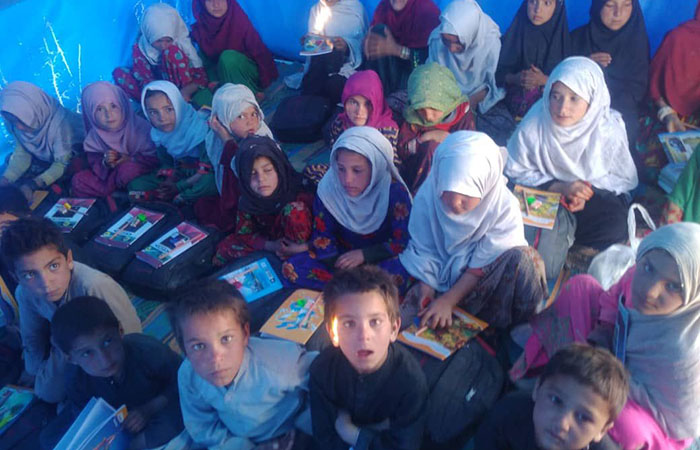
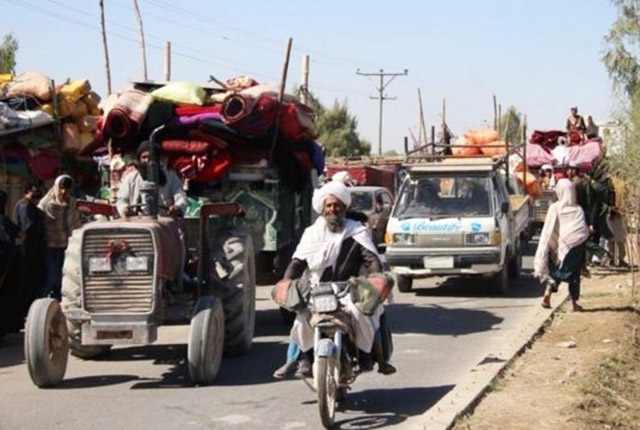
This still leaves an enormous number of Afghans who are displaced without a permanent home. More than half a million have already been displaced by the violence so far in 2021 according to the U.N. refugee agency. Some 80% of nearly a quarter of a million Afghans forced to flee since the end of May are women and children.
As of 2021 and prior to the current crisis, at least 3.5 million Afghans remained uprooted within Afghanistan because of violence, political unrest, poverty, climate crisis and lack of economic opportunity.
Afghan refugees in Pakistan
The vast majority of Afghan refugees do not settle in the West.
Pakistan, which shares a 1,640-mile land border with Afghanistan, has long absorbed the largest number of Afghan refugees even though it is not a party to the 1951 Refugee Convention or the 1967 Protocol. Within two years of the 1979 Soviet invasion of Afghanistan, following the conflict ignited by the rise of the Mujahideen, 1.5 million Afghans had become refugees. By 1986, nearly five million Afghans had fled to Pakistan and Iran.
Since March 2002, the United Nations High Commissioner for Refugees, or UNHCR, had repatriated nearly 3.2 million Afghans, but in April 2021, the United Nations reported that more than 1.4 million Afghan refugees remained in Pakistan due to ongoing violence, unemployment and political turbulence in Afghanistan.
Iran also remains a significant host for Afghans, with nearly 800,000 registered refugees and at least two million more who are unregistered. Smaller numbers of Afghan refugees and asylum-seekers are in India (15,689), Indonesia (7,692) and Malaysia (2,478).
Turkey – the world’s largest refugee host, with over 3.8 million registered Syrian refugees – has 980 registered Afghan refugees and 116,000 Afghan asylum-seekers.